
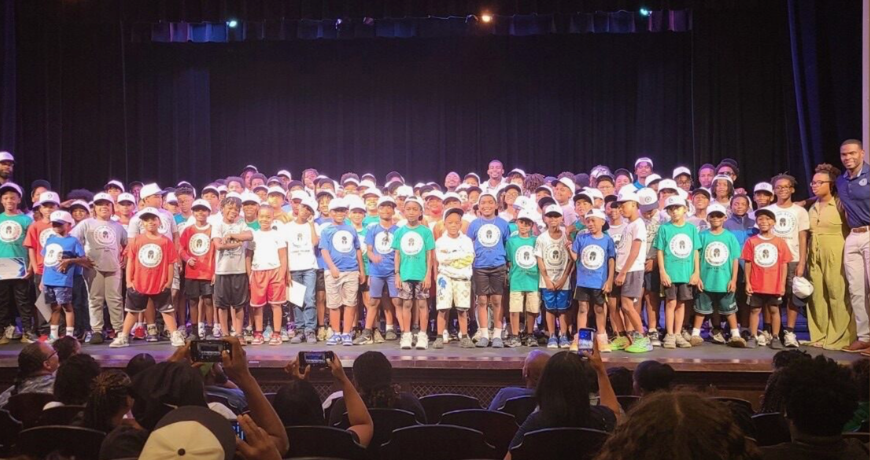

A program born in Detroit to meet a need too many schools still struggle to address has grown into a multi-state effort reaching more than 1,000 boys and young men each year.
Warrior Academy, founded by former educator and Army veteran Russell Harris Jr., has expanded from a small mentorship program into an organization with nearly 20 school sites across Michigan, Illinois, and Minnesota. What started as a Detroit-based response to gaps in leadership development and emotional support for boys now stands as a growing model for how schools and communities can respond with intention.
Michigan remains Warrior Academy’s largest hub, with 10 school sites across the state. New partnerships have also launched in Minneapolis and Chicago, pushing the program’s reach across the Midwest at a time when more schools are searching for ways to improve student engagement, emotional wellness, and academic discipline.
That growth matters because too many boys, particularly those navigating trauma, instability, and systems that were never designed to fully see them, are expected to figure out leadership and emotional control without the tools to do either well. Warrior Academy was built to respond to that reality through mentorship, peer leadership opportunities, wellness programming, and a direct focus on leadership, emotional intelligence, and academic discipline.
“Too often, boys are navigating systems and life circumstances without the emotional tools, mentorship, and structure they need to lead their own lives,” Harris said. “We are building the mindsets, skillsets, and habits that empower them to shape their futures by choice, not circumstance.”
Early outcomes reported by the organization suggest that approach is producing measurable results. Warrior Academy says 95% of students report improved leadership skills. The program also reports 92% academic improvement in English language arts and math, along with a 98% reduction in school absences.
Those numbers arrive as districts across the country continue wrestling with student disengagement, attendance challenges, and the long-term effects of emotional stress on learning. Warrior Academy’s rise signals that schools are increasingly willing to invest in programming tailored specifically to boys and young men, especially when that programming centers both discipline and emotional wellness rather than treating them as separate needs.
Harris brings more than a mission statement to that work. A Chicago native and the first male in his family to graduate from college, he has spent more than 15 years leading youth development and education initiatives across the Midwest. His career began in education, where he served as a dean before becoming principal of Jalen Rose Leadership Academy in Detroit at just 25 years old.
Under his leadership, the school reached a 96% to 98% graduation rate and 100% college acceptance, becoming one of Detroit’s top-performing open-enrollment charter schools. That experience, especially his work with young men dealing with unmet emotional needs, trauma, and instability, helped shape the philosophy behind Warrior Academy.
Originally launched in 2015 as “Morning Warrior,” the effort began as a small mentorship and fitness initiative for boys who needed additional support before the school day started. Over time, it evolved into a broader leadership and youth development model that now includes school-based programming, summer enrichment, paid peer mentorship, college readiness, and wellness retreats.
At the center of that work is a belief too often missing from policy conversations around boys: they deserve intentional spaces to grow socially, emotionally, and academically. That framing pushes back against a tendency to only engage boys when there is a disciplinary problem, an attendance issue, or a crisis. Warrior Academy’s model instead treats leadership and emotional development as necessary parts of preparing young men for school, relationships, and life.
Harris’s work beyond Warrior Academy reinforces that same focus on building long-term opportunity. He is also a social entrepreneur, founder, and multi-sector business leader whose work spans youth-focused ventures, technology solutions, and LaSalle + Harris Group, a Detroit-headquartered construction firm with projects across the country. Across those efforts, the throughline remains community transformation rooted in purpose.
He previously served as CEO of Soar Detroit, where he led a major expansion, secured millions in funding, managed multimillion-dollar budgets, mobilized hundreds of volunteers, and built partnerships with school districts and community organizations to address literacy and mentorship gaps. He also held senior leadership roles with Boys & Girls Clubs of Southeastern Michigan and The Future Project, where he launched new sites, expanded youth participation, and developed nationally recognized programs.
His background also includes service as a retired chaplain in the United States Army, where he provided spiritual and emotional support to soldiers and their families. That experience further deepened a leadership approach grounded in service, wellness, and emotional support rather than performance alone.
Harris has also studied business and leadership at Stanford University and education leadership at Harvard University’s Graduate School of Education. He holds a master’s degree in organizational management and leadership.
Still, Warrior Academy’s story is bigger than one résumé. Its expansion speaks to a broader question schools and communities can no longer afford to ignore: what does it look like to create spaces where boys and young men are taught how to lead, process emotion, stay academically grounded, and build healthy habits before crisis becomes the entry point?
Detroit helped birth one answer.
What began here as a small support system for boys needing more structure before the school day has grown into a regional model serving young men across three states. That kind of expansion does not happen without demand. Schools are looking for programming that understands many boys need more than intervention after something goes wrong. They need consistency, mentorship, accountability, and room to develop emotional language alongside academic skill.
Warrior Academy is positioning itself inside that gap.
Harris, now recognized nationally as an advocate for boys and young men, continues to push that work forward while also planning for what comes next. He is currently working toward launching a school for boys in Chicago, an effort that would further expand his mission of creating pathways for young men to thrive.
He and his wife are the parents of two daughters and a son, and that personal connection to family and future sits alongside a professional track record built across education, youth development, entrepreneurship, and service.
For Detroit, Warrior Academy’s growth offers something worth paying attention to. A locally rooted idea aimed at helping boys lead their own lives has moved beyond a single city while holding onto the same core premise that launched it: boys need intentional support, emotional tools, and spaces built with their futures in mind.