


The NAACP Detroit Chapter has unveiled its speaker and honoree lineup for the 71st Annual Fight for Freedom Fund Dinner, returning Sunday, April 26, at Huntington Place.
Long regarded as one of the largest and most consequential civil rights dinners in the country, the annual gathering draws national political figures, grassroots organizers, and community leaders to Detroit for an evening that blends recognition with urgency. This year’s theme, “Liberty or Oppression – The Choice Is Ours!” signals a program focused squarely on the stakes facing American democracy.
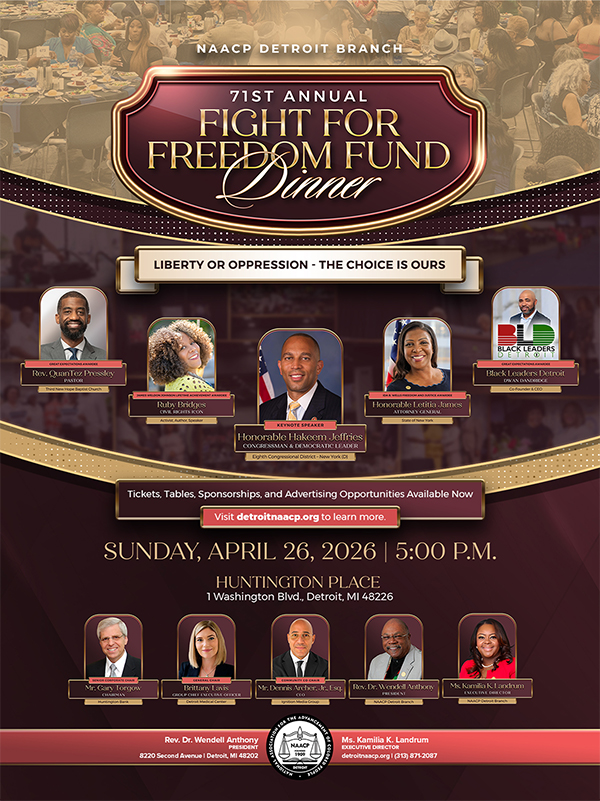
Headlining the evening as the keynote speaker is U.S. House Democratic Leader Hakeem Jeffries. Since taking the helm of House Democrats, Jeffries has become one of the most visible figures in Washington, navigating high-stakes legislative battles while framing issues of voting rights, economic fairness, and judicial balance for a national audience. His appearance in Detroit comes at a moment when control of Congress and the direction of federal policy remain deeply contested.
The program will also honor individuals whose work reflects different chapters of the ongoing struggle for civil rights and equity.
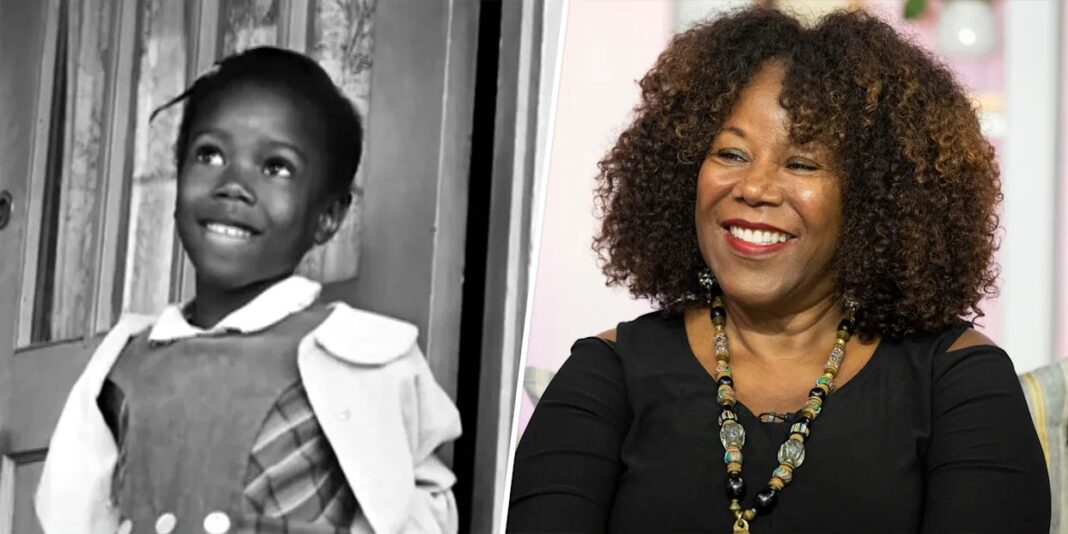
Among them is Ruby Bridges, who will receive the James Weldon Johnson Lifetime Achievement Award. Bridges became a national symbol of courage in 1960 when, at 6 years old, she integrated into an all-white elementary school in New Orleans under federal protection. Her daily walk past crowds of protestors marked one of the most searing images of the desegregation era. In the decades since, Bridges has continued to speak about the importance of education, empathy, and confronting racism early.
New York Attorney General Letitia James will receive the Ida B. Wells Freedom & Justice Award. Over the course of her career, James has built a reputation for taking on powerful institutions, from financial entities to public officials, often placing her at the center of nationally watched legal battles. Her approach echoes the legacy of Ida B. Wells, the investigative journalist who used her platform to expose injustice and demand accountability at great personal risk.
Two Detroit-based leaders will be recognized with the Great Expectations Award, an honor that highlights emerging and established voices working to reshape the city’s future.
Rev. QuanTez Pressley, pastor of Third New Hope Baptist Church, has combined ministry with public service, including time on the Detroit Board of Police Commissioners. His work has often focused on bridging divides between law enforcement and the communities they serve, while maintaining a strong emphasis on faith-driven advocacy.
Dwan Dandridge, co-founder and CEO of Black Leaders Detroit, is being recognized for his efforts to expand economic opportunity for local entrepreneurs. Under his leadership, the organization has distributed millions in grants and no-interest loans to small businesses, a strategy aimed at building long-term stability and ownership within Detroit’s neighborhoods.
In announcing the event, NAACP Detroit Branch President Rev. Dr. Wendell Anthony framed this year’s dinner as a crucial moment for the city and the nation.
“The time is always right to do what is right,” Anthony said, invoking the words of Dr. Martin Luther King Jr. “Now is the time to do right by justice, freedom, and the preservation of our democracy.”
Anthony also pointed to the broader climate shaping this year’s gathering, describing it as a period when Americans are being called to “stand up, defend, protect” core democratic principles. He added that the dinner is intended to serve as “a call to action” at a moment when, in his words, “the very soul” of the nation is being tested.
The Freedom Fund Dinner has long functioned as both a fundraiser and a barometer of the issues most pressing to Detroit’s Black community, but more broadly as a way to hold up a mirror to the issues that impact people of color across the country. Past speakers have included sitting presidents, civil rights icons, and national advocates, reinforcing the city’s role as a consistent voice in shaping conversations around race, policy, and power.
This year’s honorees reflect that same intersection of history and present-day influence—from Bridges’ role in one of the defining moments of school desegregation to James’ ongoing legal battles and Dandridge’s work to close wealth gaps at the neighborhood level.
The April 26 event will be preceded by “Freedom Weekend,” a series of public programs organized in partnership with the Freedom Institute for Economic, Social Justice, and People Empowerment. The sessions are expected to focus on civic engagement, economic equity, and policy discussions tied to the dinner’s theme.
As ticket sales and sponsorship efforts ramp up, organizers are emphasizing that participation is an investment in the work the NAACP Detroit Branch continues year-round.
For many in Detroit, the Freedom Fund Dinner is less about ceremony and more about alignment, bringing together those working across different lanes of advocacy, from policy to grassroots organizing, at a time when the questions raised by this year’s theme feel less rhetorical and more immediate.