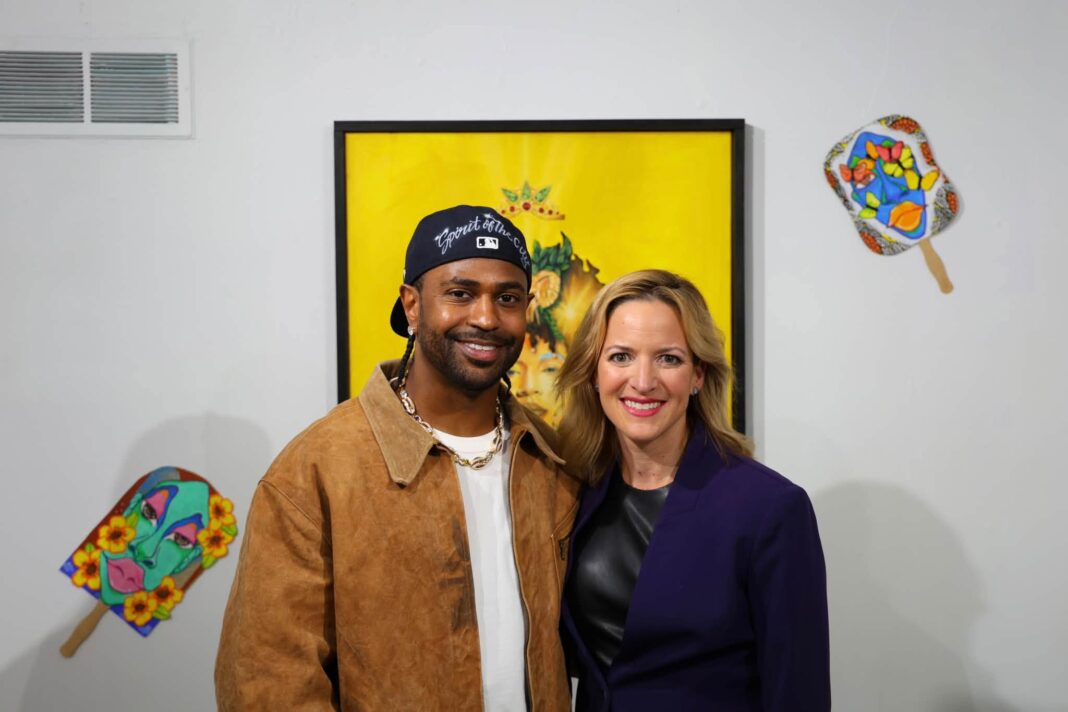


Jocelyn Benson and Big Sean probably aren’t a duo you’d expect to see galivanting around town on a Friday night.
But they came together in Detroit on Sept. 25 to talk about the future of Michigan’s economy through a creator’s lens.
From music to manufacturing, Detroit has been instrumental in “moving” the world. Our legacy as a creative hub – including being the only U.S. city designated as a United Nations Educational, Scientific and Cultural Organization (UNESCO) City of Design – has made us the envy of many.
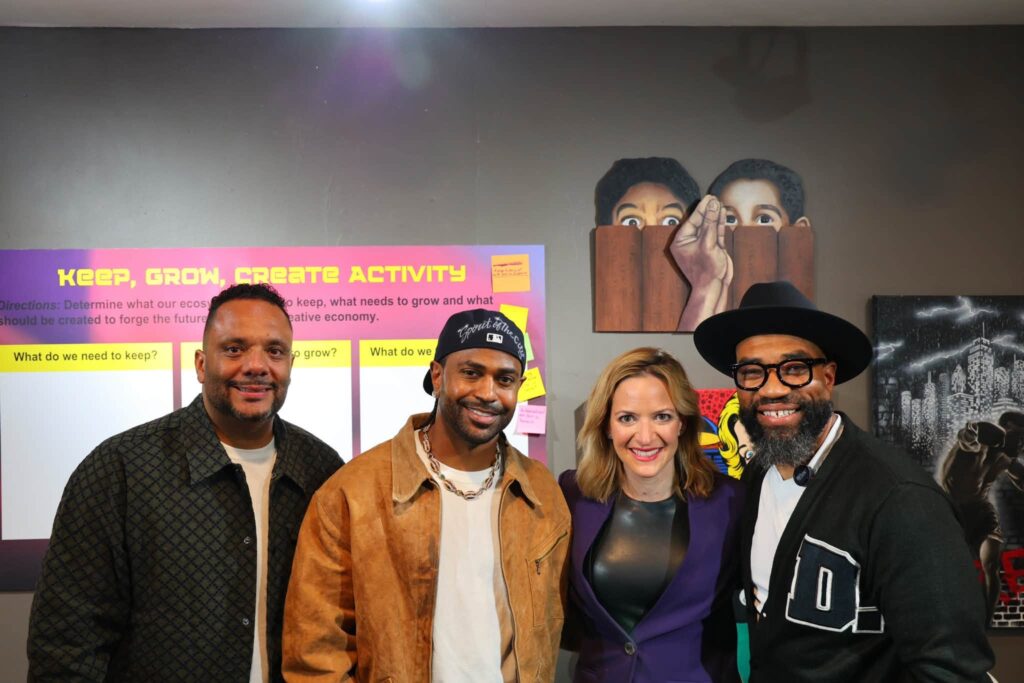
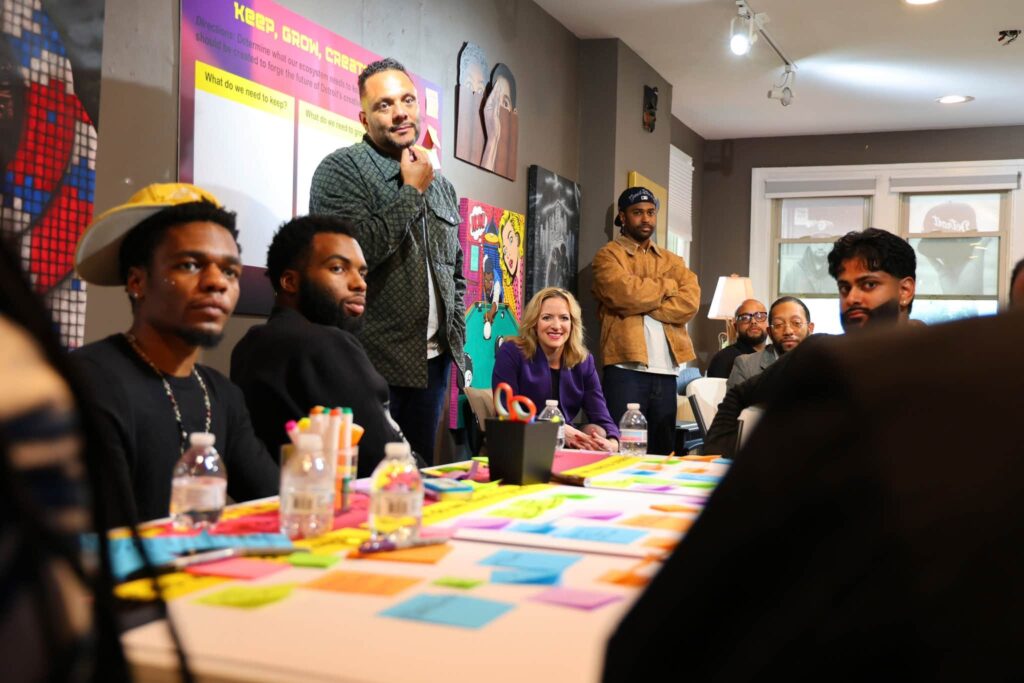
With that in mind, gubernatorial candidate and current Secretary of State Jocelyn Benson joined rapper Big Sean and other members of Detroit’s creative community for a roundtable event where the importance of ownership, teaching the arts, and financial literacy for creatives will become a priority soon.
“I am eager to partner with all of you because I know we’re in a very unique time,” Benson told the intimate crowd at Irwin House Gallery. “We’re in a time where we have lost our ability to see each other, and that divisiveness is infecting our not just our politics, but societies all around the state, and it’s holding us all back. And art is the way out.”
The roundtable took place during the inaugural Detroit Creator Weekend – a four-day experience for creators, brands, and professionals to connect, learn, and collaborate. The weekend is the brainchild of founder Amber M. Lewis, better known as Social ‘N The City, as she continues her work to showcase Detroit as a power player in the global creator economy. The event was hosted by Roderick Hardamon of Urge Development and Shawn Wilson of the Boys and Girls Club of Southeastern Michigan.
Benson said that she envisions making Michigan the creative capital of the nation. She added, “Arts are the way through creative culture, and the creative economy is how we grow our economy — investing in places that people then connecting with the artists who tell the stories of those places and change not just how Detroit is seen, but how Michigan is seen, and how the entire way of defining arts and culture could be seen in our nation.”
During the event, Benson also mentioned a goal to reinstate the statewide film production tax credit or incentive program which ended in 2015 after lawmakers felt that insufficient economic return. “As governor, I do want to bring those tax credits back to Michigan in a thoughtful, strategic way that doesn’t just compete with what other states are already doing, but surpasses them to ensure that we’re landing the best productions and the greatest economic opportunity right here in Michigan.”
She added, “With tax credits, also has to come investment in workforce development opportunities, investments in arts education, so that kids are learning the arts and having opportunities in school to continue their creative journey, and then take that into the industry, so that we’re not just bringing film production or other types of productions here, but we’re generating a workforce and infrastructure right here in Michigan, so that more people are getting jobs as more films are being made, and it generates economic growth and development statewide.”
According to UNESCO, Detroit’s creative industries have been a driver for the city’s urban regeneration and represents today a significant lever for employment and an economic engine by employing more than 45,000 people and generating $2.5 billion in wages.
Benson added: “My hope would be Michigan leads the way to build an arts economy and takes care of its creatives. We owe you a debt of gratitude for the work that you do to bring people together to tell stories that otherwise would be untold to help others see struggles and be inspired to light their own fire to move forward.”
Big Sean, who was previously signed to Kanye West’s Good Music/Def Jam Recordings in 2007, spoke about the importance of Detroit creatives to support and prepare each other for current and future opportunities.
“I think that it’s important as a community of creatives that we be prepared for this opportunity. That we work on ourselves, pour into ourselves, fill our wells up creatively, personally, spiritually, religiously,” he said. “You know, trust in ourselves. I feel like we’re entering a moment that we’ve never got an opportunity to be in. So, I think that you must take it seriously and have fun with it, you know, because it’ll show in the work, and wherever you show up for energetically is how it comes out.”
He added, “I think everyone should get excited and bring their best self to it. And I think that when the time comes, because it’s inevitable, right? It’s gonna come very soon, so when the time comes, let’s be prepared and show them why we deserve it.”
Big Sean said that he would utilize his own resources, including the Sean Anderson Foundation, run by his mother Myra Anderson.
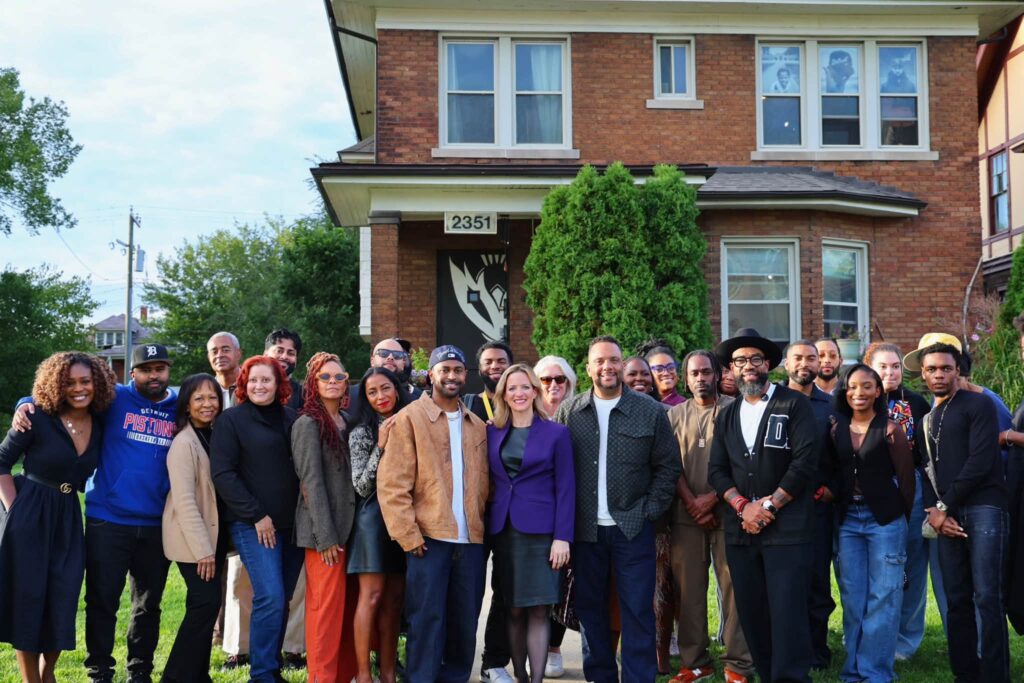
“I’m gonna do my best to set the stage, but we have got to make sure our community is tighter than ever. Everybody in this room should be interconnected and know what’s going on with each other, and like ‘How can we help?’ Including myself.”
The event was one of many where Benson has been speaking and promising statewide support for the city of Detroit should she win the governor’s seat over Republican John James. At an August 2026 event various Black officeholders, organizers, and supporters gathered at a crowded union hall on the city’s west side, where attendees included Wayne County Executive Warren Evans, Rev. Horace Sheffield III, and Yusef Jackson, son of the late Rev. Jesse Jackson Sr.
Michigan Public reported that at the event Benson said, “We talk about raising the minimum wage and doing the bare minimum. I want to do more than that. I want generations who’ve been left out of opportunities for economic wealth generation to be a part of that now so we can invest in small business ownership and other things to grow our economy, particularly for communities who’ve been left out of that opportunity for far too long.”
During Friday’s creative roundtable Benson said that she “believes strongly in the power of arts to create social change. She added, “I believe when we look at the work we need to do to grow our economy, though the arts economy creates film content, celebrating our culture, celebrating who we are that also creates wealth as well in cities and throughout our state.”
You can reach Biba at biba.adams@michronicle.com.