

By Sherry Gay-Dagnogo, M.Ed.
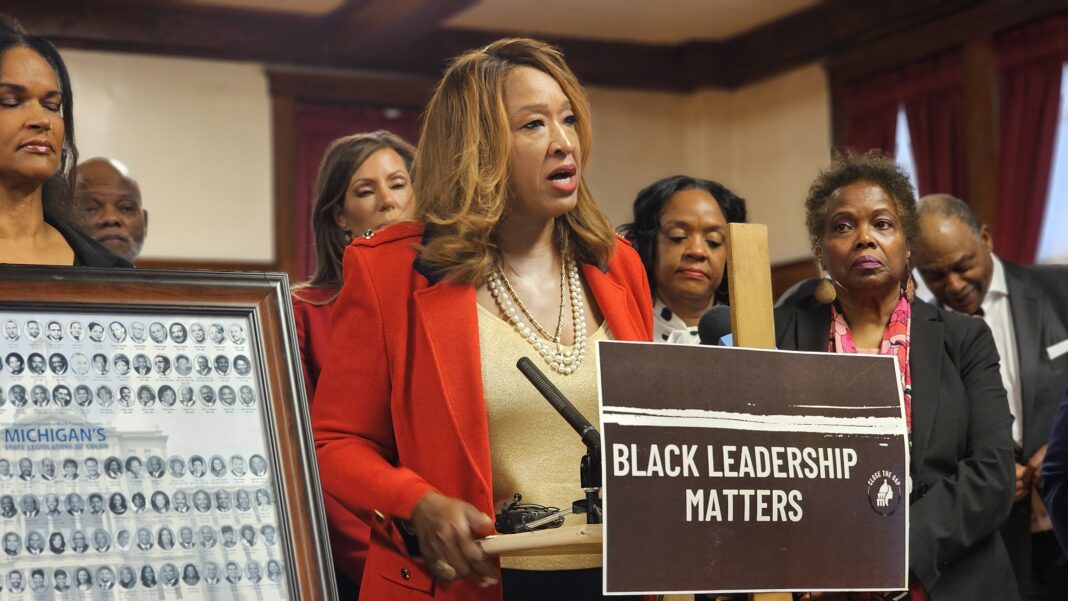
For generations, Black women have been the backbone of political organizing, voter engagement, community advocacy, and civic participation in Michigan. We knock doors. We register voters. We organize churches, neighborhoods, schools, and community groups. We mobilize during elections, defend democracy when it is under attack, and consistently turn out to vote at rates that often exceed expectations.
Yet despite this unwavering commitment, Black women too often find themselves at the end of the line when decisions are made, resources are allocated, and leadership opportunities emerge.
Election after election, our voices are amplified when our votes are needed. Campaigns seek our endorsements, our networks, our labor, and our trust. But once the ballots are counted and governing begins, many Black women are left asking a familiar question: Where is the return on our investment?
This is not merely about elected office. It is about power, influence, access, and parity.
Black women have helped shape Michigan’s political landscape for decades. We have led movements for educational equity, criminal justice reform, voting rights, economic opportunity, healthcare access, and neighborhood revitalization. We have stood on the front lines of battles for civil rights and democratic participation. Yet too often, our policy priorities are delayed, our expertise overlooked, and our leadership questioned in ways that others rarely experience.
The issue is not a lack of talent. Michigan is home to an extraordinary cadre of Black women leaders, professionals, educators, attorneys, entrepreneurs, advocates, and public servants. The issue is whether institutions are willing to invest in Black women with the same intentionality that Black women have invested in those institutions.
Parity should not be controversial.
Parity means ensuring Black women have meaningful opportunities to lead statewide organizations, government departments, commissions, boards, and policy initiatives. It means equitable campaign support, equitable access to fundraising networks, and equitable consideration for appointments and leadership positions. It means recognizing that representation is not simply about having a seat at the table; it is about having the authority to help shape the menu.
The call for parity is not merely about who occupies elected office. It is about whether the daily struggles facing Black women and their families are treated as policy priorities rather than campaign talking points.
In Detroit, Black women continue to bear the burden of some of the state’s most persistent inequities. Mothers struggle to get their children to school and activities while paying some of the highest auto insurance rates in the nation. Affordable childcare remains a promise often repeated during campaign season but too rarely delivered in ways that materially improve the lives of working families. Women-owned businesses, particularly Black women-owned businesses, continue to face barriers accessing capital, investment opportunities, and lending resources that remain more readily available in suburban and affluent communities.
In the workplace, Black women often encounter a different set of challenges. Some face discrimination in hiring and promotion. Others find themselves doing the same work as their peers while earning less compensation or receiving fewer opportunities for advancement. Too many are expected to carry organizations, solve problems, and demonstrate exceptional performance while simultaneously navigating barriers their counterparts never face.
These challenges are not new. The question is why they persist despite decades of political engagement and unwavering support.
Black women have earned more than symbolic recognition. We deserve explicit commitments tied to measurable outcomes. We deserve policy agendas that directly address economic mobility, affordable childcare, fair wages, entrepreneurship, access to capital, healthcare, housing stability, and educational opportunity. We deserve leaders who will not simply ask for our votes but will publicly commit to advancing solutions that improve our quality of life.
Because when the campaign signs come down, when the television ads stop running, and when the election celebrations end, Black women remain. We are still raising children, operating businesses, caring for aging parents, working multiple jobs, leading communities, and carrying the weight of systems that too often fail to serve us equitably.
Michigan cannot afford to continue treating Black women as indispensable during campaigns and optional during governance.
The future of our state depends on leaders who are willing to move beyond symbolic appreciation and toward substantive inclusion. It requires political parties, elected officials, donors, advocacy organizations, labor unions, and civic institutions to examine whether their actions truly reflect the value they publicly place on Black women.
The question is no longer whether Black women have earned a place in Michigan’s political leadership. That question was answered long ago.
The question now is who will stand with us in the fight for parity, fairness, and genuine power-sharing.
Black women have spent generations fighting for democracy, often while democracy failed to fully fight for us.
We are not asking for special treatment. We are asking for equitable treatment.
We are not asking for charity. We are asking for opportunity.
We are not asking to be heard only when votes are needed.
We are asking to be heard, respected, invested in, and included when decisions are made.
The true measure of political loyalty is not what is promised before Election Day. It is what is delivered afterward.
Black women have consistently shown up for Michigan. The question before Michigan is whether Michigan is finally prepared to show up for Black women.