
Why Ownership Is the Foundation of Power, Protection, and Progress
By Dr. Anthony O. Kellum
Few questions carry greater weight for the future of Black America than this: How crucial is property ownership to our collective progress?
The answer is not theoretical or abstract, it is structural, historical, and urgent. Property ownership has always been the dividing line between those who have a stake in America’s future and those who live at the mercy of forces they cannot control. For Black Americans, whose ancestors were once considered property themselves, owning property today is not only a financial act it is a declaration of humanity, autonomy, and permanence.
Property gives a family more than a place to live. It provides leverage, stability, safety, and the ability to chart a future with confidence. In a country organized around land, capital, and inheritance, ownership becomes the bedrock upon which mobility and opportunity are built. It signals that you are not just surviving in America, you are participating in its economic engine and securing your place within it.
Why Ownership Is the Foundation of Power, Protection, and Progress
To understand why ownership is so critical for the Black community, we must examine three interconnected pillars: power, protection, and progress.
1. Ownership Creates Power Through Permanence and Control
Power begins with the ability to control your own environment, how you live, where you live, and what you build. When you own property, you are no longer operating under someone else’s terms or timeline. You gain sovereignty over space, and with sovereignty comes agency.
Ownership creates a psychological and economic shift from being temporary to permanent, from reactive to strategic. For Black Americans, this is transformative. It moves us from being placed by society to placing ourselves. Ownership turns residents into stakeholders, and stakeholders into decision-makers.
2. Ownership Provides Protection Against Instability and Displacement
Renting leaves families vulnerable to rising costs, landlord disputes, evictions, and the pressures of gentrification. Ownership is a shield that stabilizes a family’s position within their community. No landlord can suddenly decide your future. No market trend can unseat you from the home you have earned and paid for.
This level of protection has generational significance. It ensures that children are raised in stable environments, that family roots deepen, and that entire communities are not uprooted by outside economic forces. For the Black community, ownership interrupts the historical pattern of displacement that has followed us from slavery to urban renewal to modern gentrification.
3. Ownership Drives Progress Through Wealth, Equity, and Opportunity
Progress requires resources and the most accessible, reliable path to building wealth in America is homeownership. Equity appreciates. Equity can be borrowed against. Equity can fund education, entrepreneurship, investments, or provide a cushion during financial hardship. Most importantly, equity can be passed down, becoming the first building block for the next generation.
For Black families historically denied access to this tool, homeownership is more than an investment; it is a form of reparative economic justice. Property breaks the cycle of starting from zero and establishes a foundation that becomes stronger with each generation.
Property Ownership as a Defense Against Displacement
Throughout American history, Black communities have endured repeated displacement, often orchestrated through policy, profit, or political intent. From forced migration during slavery, to the destruction of thriving Black towns, to the discriminatory tactics of redlining, displacement has been a constant threat.
Renters remain exposed to these forces. Homeowners are anchored. Ownership ensures continuity the ability to stay, to withstand market shifts, and to retain the cultural, social, and familial connections that define a community.
Property as the Gateway to Wealth and Economic Continuity
The racial wealth gap is not a gap of ambition or talent it is a gap of access to assets. Homeownership is the strongest predictor of wealth in America. When property values rise, equity compounds. When equity compounds, opportunity multiplies. And when opportunity multiplies, families move from economic fragility to economic power.
Generational wealth is born when one generation leaves the next something tangible, something that appreciates rather than depreciates. Property transforms financial vulnerability into financial momentum.
The Psychological Shift: From Renting Life to Owning Legacy
Ownership changes how individuals see themselves and how communities understand their worth. It fosters a long-term mindset, the kind of thinking that leads to stability, planning, and legacy-building. Children who grow up in owned homes often carry a stronger sense of security and possibility. They view ownership as normal, expected, and within reach.
Renting conditions people to think in short cycles. Ownership conditions people to think generationally.
Property as a Source of Political and Community Power
Property ownership strengthens political influence. Homeowners vote more, engage more, and advocate more because they have a direct stake in local decisions, schools, zoning, taxes, safety, and long-term community development. Communities with high homeownership rates have greater leverage because their members represent permanence, stability, and investment.
For Black communities, expanding ownership means expanding our voice. It means ensuring that policies reflect our presence, not our absence.
Ownership as the Anchor for Black Stability and Advancement
In uncertain economic times, property ownership becomes even more vital. Without it, families are exposed to market volatility, exploitation, and dramatic rent increases. With ownership, families gain stability, leverage, and the strategic advantage of appreciating assets.
Ownership is not a luxury it is a necessity for long-term stability and upward mobility.
The Crucial Truth
So how crucial is property ownership for the Black community?
It is not an option. It is essential. It is the foundation of economic liberation, political strength, community stability, and generational progress. It is the single most important lever that can close the wealth gap, protect against displacement, and secure a future where Black families do more than survive, they thrive.
In America, property is not just property. Property is Power. The power to stay, the power to grow, the power to build, the power to protect, the power to decide, the power to pass something forward.
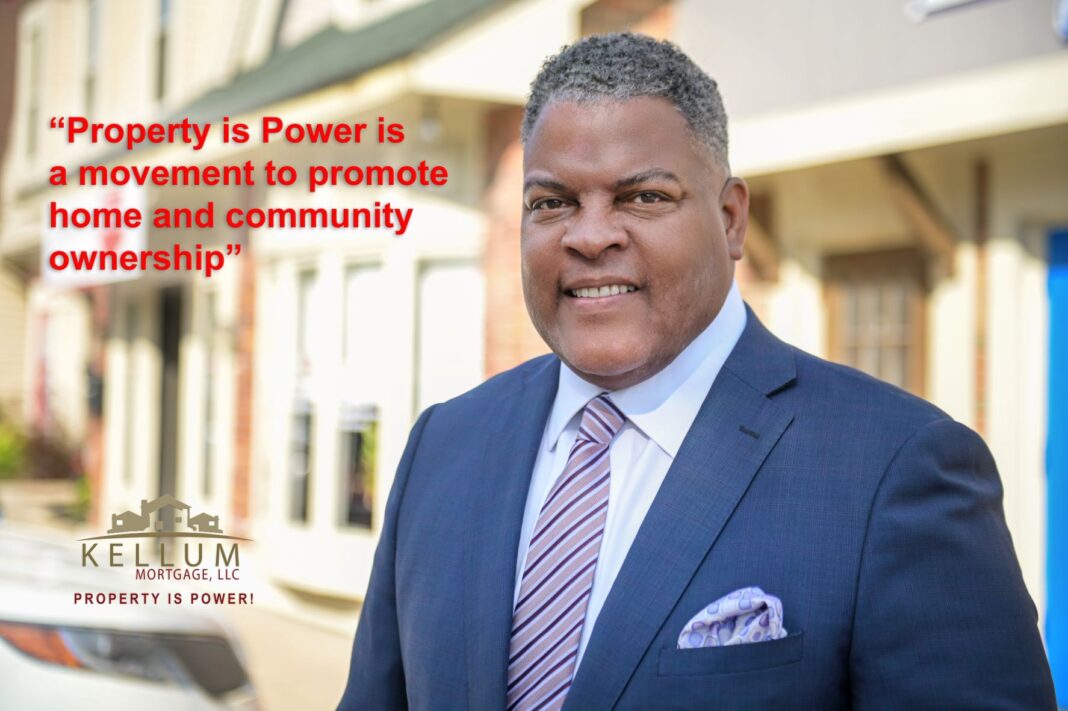
Property is Power! is a movement to promote home and community ownership. Studies indicate homeownership leads to higher graduation rates, family wealth, and community involvement.