
Budget season in Michigan rarely produces surprises. Under normal practice, when state agencies don’t spend all of the money allocated for a specific program within a fiscal year, that funding is carried forward. It’s a standard process laid out in Michigan’s Management and Budget Act, allowing unspent appropriations to shift into “work projects,” a category created so multi-year programs can continue without disruption.
For decades, lawmakers have treated this as routine administrative housekeeping. Funds move, programs continue, communities plan, and residents rely on the stability.
That expectation collapsed last week.
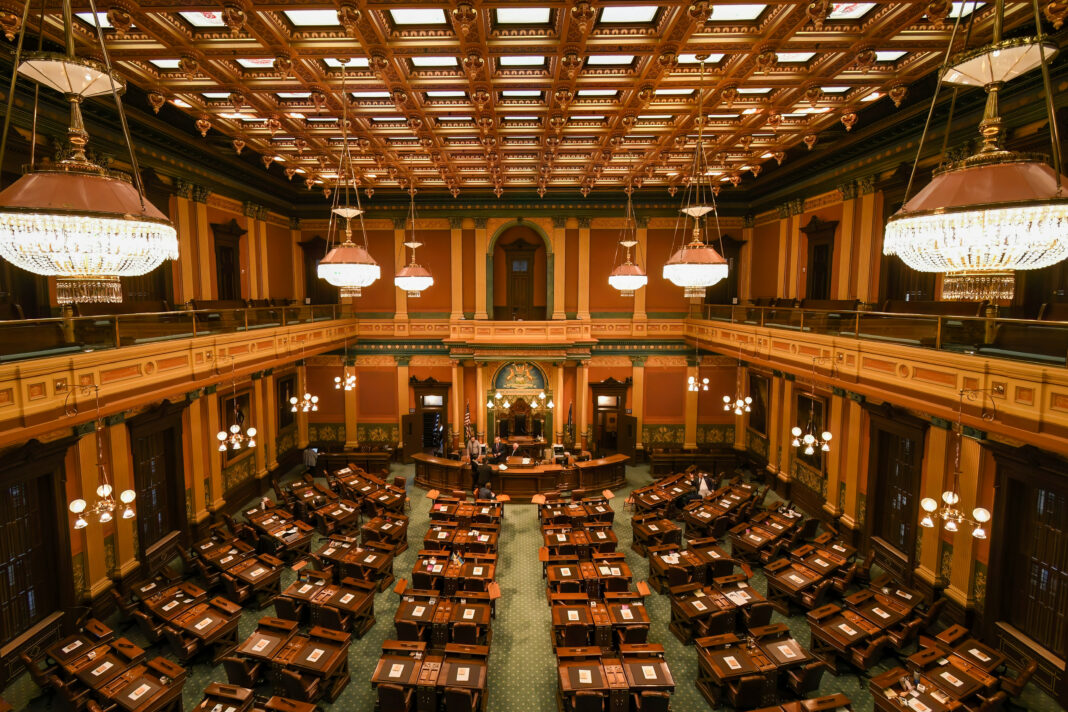
On Wednesday, the Republican-controlled House Appropriations Committee used an uncommon provision of state law to block hundreds of millions of dollars in already-approved budget carryforwards. The committee acted unilaterally — the statute does not require Senate approval or the governor’s signature. With one procedural maneuver, lawmakers erased $645 million targeted for projects supporting Michigan families, schools, neighborhoods, and public institutions.
“In my entire time living and working in Lansing, including serving as the lead Senate budget negotiator since 2023, I have never seen anything as deliberately cruel and downright disgusting as what House Republicans did when they took it upon themselves to unilaterally cut over a half billion dollars in funding promised to Michigan’s kids and communities,” said Sen. Sarah Anthony, Chair of the Senate Appropriations Committee. “We’re talking about bipartisan passed, already agreed upon resources to uplift new moms and their babies at the most vulnerable stage of life, funds to provide services to kids with cancer, resources to improve school infrastructure, food pantry expansions, affordable housing projects, and much more.”
The immediate outcome was confusion among nonprofit leaders, local officials, educators, and health providers who had been preparing for programming tied to funds they believed were secure. A list released by the Michigan Department of Technology, Management, and Budget shows cuts spread across more than 160 community-based initiatives totaling roughly $100 million alone. Environmental projects, school facility upgrades, food pantry expansions, arts and recreation investments, and grants for children with cancer were all removed.
WDET Detroit Public Radio lost a $1 million grant. Several zoos, winter sports facilities, and stadium projects across the state saw funding disappear. Affordable housing developments scheduled to begin construction next year were left without key financing. Programs serving mothers, infants, students, and low-income families were among the hardest hit.
Rx Kids — one of the most closely watched initiatives in the country for maternal health and early childhood poverty reduction — was on that list. Launched in Flint and built with bipartisan support, the program provides direct cash assistance to pregnant women and new mothers, with expansions underway in Clare County, Roscommon County, and the Eastern Upper Peninsula. Its leaders were preparing for 2025 implementation phases supported by the now-eliminated state funds.
The abrupt reversal sent shockwaves across the maternal-health sector, where Michigan’s racial disparities in infant and maternal outcomes have been well documented. For districts with aging school infrastructure, losing state-approved support means delaying repairs many families consider overdue. For cancer support programs providing wigs and comfort items to children undergoing treatment, the funding gap is immediate and personal.
Sen. Anthony responded with a forceful statement, framing the cuts as both an ethical and procedural breach.
“Time and time again, I’ve said: budgets are moral documents,” she said. “Not only does this political maneuver by Matt Hall and his Republican colleagues lack any ounce of humanity; it’s also completely reckless, devoid of transparency, and a slap in the face to the people of Michigan, who deserve better than this.
Anthony said she had never seen an action of this scale taken without transparency or collaboration. She pointed to the proximity to the holidays and the financial strain many Michigan households already face.
“Here we are nearly two weeks before Christmas, at a time when so many Michiganders across the state are already struggling to make ends meet,” she said. “Rather than do his actual job to protect the people he was entrusted to serve, Speaker Hall pulls the rug out from under them. Especially after months of whiplash from the chaos and uncertainty caused by Republicans in the federal government, this action only further erodes trust in government. Michiganders simply do not have the time for this nonsense, nor should they be expected to navigate yet more chaos at the hands of state leaders.”
The criticism connects to broader concerns about political volatility. Michigan residents have spent the past year navigating federal budget showdowns, proposed cuts to key safety-net programs, and uncertainty around state-level appropriations. Wednesday’s decision deepened questions about the reliability of bipartisan agreements and the stability of investments communities depend on.
The committee’s authority to terminate work-project funding has existed for years, but its use has been rare. Policy analysts note that the provision was intended as a check against unnecessary or redundant spending — not a mechanism to retroactively erase programs already moving forward with signed contracts, local planning, or community expectations.
For project sponsors, next steps remain unclear. Some programs may attempt to reapply for future appropriations. Others may scale down, delay, or close entirely. The Senate cannot reverse the committee’s action under the current statute, but Anthony signaled plans to pursue legislative avenues for accountability.
“Over in the Senate, where we serve with actual integrity and actual leadership, you can rest assured I’m going to do everything I can to hold House Republicans accountable and ensure every Michigander knows what they did,” she said.
As communities across the state reassess their budgets heading into the new year, the long-standing assumption that approved funding would remain stable no longer holds.
For families counting on maternal-health supports, students waiting on school building updates, and nonprofits preparing holiday distributions, the impact is immediate — and the questions about what comes next have only grown.