

By Darryl Jacobs ESPN, CBS Sports Networks Commentator
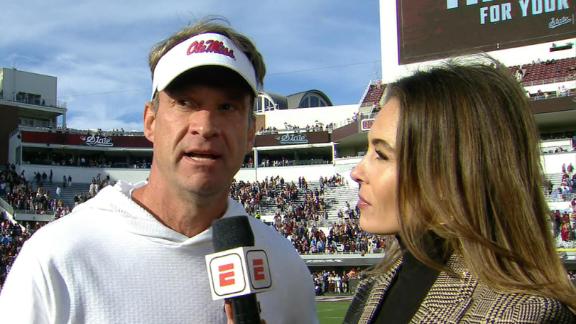
Having spent decades in college athletics, professional sports, and nonprofit leadership, I’ve learned that real professionalism is not about titles, salaries, or facilities — it’s about responsibility. And when I look at the Lane Kiffin situation, watching a head coach walk away from a team on the doorstep of the biggest stage in college football, I don’t see a sport being “professionalized.” I see a sport that has never held its leaders to professional standards in the first place.
The immediate reaction from many corners of college sports was predictable. Some people blamed NIL. Others pointed at the transfer portal. Some even tried to claim that player freedom is what triggered instability across the sport. But from my vantage point, after years of working with athletes, coaches, agents, and administrators, the instability did not come from the players. The instability stemmed from those in charge.
The Double Standard That No One Wants to Talk About
Throughout my career, I’ve seen the same pattern repeat itself: players are expected to be disciplined, loyal, and grateful, while coaches and administrators move as they please, whenever it benefits them. When a young athlete decides to transfer for an opportunity, a better situation, or financial support through NIL, they are criticized. When a coach making millions leaves a team still fighting for a championship, it’s brushed off as part of the business.
That double standard is the root of the current crisis.
If we’re going to call college sports a business, then leadership needs to actually behave like professionals. And if we’re going to call it education, then the people leading these programs need to act with integrity and accountability. Right now we have neither.
Coaches Are Operating in a System Built Entirely Around Them
For years, the power structure, particularly in college football, has been constructed around coaches. Enormous contracts, massive buyouts, and hiring processes that ignore postseason timing have created an environment where coaches can make sudden moves without consequences. I’ve seen how these deals get made. I’ve watched the behind-the-scenes maneuvering. Everyone knows the rules are loose, and when the rules are loose, behavior follows.
This didn’t start with NIL. It didn’t begin with revenue sharing. This is a culture-and-leadership failure that has been building for decades.
The Calendar Has Been Broken for Years
Anyone who has ever worked on the inside of college athletics knows the hiring timeline has never aligned with what’s best for players or the integrity of a season. Coaching vacancies collide with bowl prep, recruiting windows, and playoff runs. Programs are forced to choose between the present and the future because the system lacks structure.
In the professional leagues I’ve witnessed, certain moves do not happen because the rules don’t allow them. In college sports, everything goes. That’s not professionalism. That’s chaos.
Blaming NIL Is a Convenient Distraction
The irony of this moment is that athletes finally having a chance to benefit from their own name, image, and likeness is somehow being blamed for instability. That narrative has always been backwards. Player empowerment didn’t create chaos; it revealed the chaos that coaches and administrators had quietly operated in for years.
NIL didn’t cause a coach to walk out before the playoffs. The lack of accountability did.
Revenue sharing won’t undermine team culture; leadership that refuses to adapt will.
Athletes’ earning opportunities are not the problem. The problem is a leadership model that refuses to modernize and expects players to carry the burden.
This Moment Should Force an Honest Conversation
Whether people want to admit it or not, Lane Kiffin’s departure is a symptom of a deeper issue. It shows what happens when leadership avoids responsibility, tough reforms, and fundamental structure for sport. College football doesn’t need to fear professionalism; it simply needs to practice it.
It needs hiring timelines that protect the postseason.
It needs guardrails that create accountability at the top.
It needs leaders who stop treating player movement as the only threat to stability.
And it needs to finally recognize that NIL and revenue sharing are not the enemy — a lack of vision is.
Players Aren’t Breaking the Sport. Leadership Is.
I’ve worked long enough in this world to recognize when blame is being pointed at the wrong people. The truth is, athletes have been adapting. Fans have been adapting. Even some coaches have been adapting. But the leadership system in college football has not.
Lane Kiffin didn’t break college football. His decision revealed the truth that those of us who’ve worked inside this industry have known for years: the sport doesn’t have a player problem. It has a leadership problem.
And until the people in charge decide to lead with true professionalism — not just when players make headlines, but when coaches do — the same issues will keep repeating themselves.
About The Author:
Darryl Jacobs is a nationally recognized sports journalist and basketball commentator/analyst, affiliated with esteemed networks such as ESPN, CBS, and NBA Television Sports Networks. As a seasoned sports executive with over 20 years as a successful college head coach.
A recipient of an Honorary Doctorate in Humane Letters, Dr. Jacobs has collaborated extensively with professional athletes and has held leadership roles on several national boards focused on education, sports, and community development.