

By Dr. Carolyn Haliburton Carter, Guest Columnist
Exploring the collision of race, identity, and machine logic—how data-driven technologies are reimagining old racial hierarchies in digital form. Artificial intelligence (AI) was supposed to free us from human bias. Instead, it’s learning our worst habits with frightening accuracy.
Algorithms now decide who someone hires, who the police flag, who receives a loan, and even how someone defines ancestry. Controversies around race and machine learning have sparked debate among computer scientists over how to design machine learning systems that guarantee fairness (Benthall & Haynes, 2019).
Yet beneath the surface of data and design lies something older than the microchip: America’s centuries-old obsession with race and purity.
We’ve entered a digital age where machines are teaching themselves to recognize faces, voices, and genetic code—but they’re also learning who belongs and who doesn’t. In subtle and not-so-subtle ways, AI is reviving one of America’s most enduring racial codes: the One-Drop Rule. The prevailing criterion for deciding who is Black is, of course, the principle of hypodescent. This ‘one drop rule’ has meant that anyone with a visually discernible trace of African, or what used to be called ‘Negro,’ ancestry is simply Black (Hollinger, 2005).
To understand the technology, we have to return to history. The One-Drop Rule was never just a social convention—it was a legal and ideological weapon. Rooted in the southern enslavement, it declared that anyone with “one drop” of African blood was Black, no matter how light their skin or distant their ancestry. The rule appeared in statutes such as Virginia’s 1924 Racial Integrity Act, which forbade interracial marriage and institutionalized the notion of racial purity (Sherman, 1988).
Throughout history, racial classification systems sought to define and control people of African descent through pseudoscientific and socially constructed measurements of “Black blood.”
These classifications rooted in colonial enslaved societies, particularly in the Caribbean, Latin America, and the antebellum United States, reflected the obsession with racial purity and hierarchy. Individuals of mixed African and European ancestry were assigned names to denote the specific proportion of African lineage they were believed to possess.
For instance, “Mulatto” described a person with 50% African ancestry—half “Negro” and half White. Other classifications further subdivided these categories: Griffe (75% Black, from Negro and Mulatto), Marabon (62.5% Black, from Mulatto and Griffe), and Sacatra (87.5% Black, from Negro and Griffe). There were also names for those with Indigenous and African heritage, such as O.S. Rouge (50% Black, from Negro and Indian).
In societies like colonial Saint-Domingue (Haiti) and Louisiana, terms like “Quadroon” (25% Black, from White and Mulatto), “Tierceron” (37.5% Black, from Mulatto and Quadroon), and “Octoroon” (12.5% Black, from White and Quadroon) appeared in censuses, legal documents, and literature.
These labels served not merely as descriptors but as instruments of racial hierarchy—defining one’s rights, social status, and even freedom or enslavement. The ideology behind these classifications culminated in the American “one-drop rule,” which held that any trace of African ancestry, however minute, made a person legally and socially “Black” (Williamson, 1980; Davis, 1991; Sweet, 2003).
The reason was always control by the enslaver. By labeling mixed-race people as Black, white elites maintained a racial hierarchy that secured power, property, and privilege. The law did more than segregate—it defined identity itself as something measurable, traceable, and enforceable. It made race a kind of algorithm: input ancestry through genealogy equals DNA and output identity.
Generations of Black families felt the consequences of these labels. Entire lineages were legally reclassified, erasing Indigenous, European, and multiracial roots. The One-Drop Rule didn’t just say who could marry or own land; it also said who was fully human in a world where white people were in charge (Post, 2009).
Today, that same logic—categorization by data, hierarchy by blood—has been reborn in code. Machine learning (ML), frequently used in constructing AI, relies on observing trends in data and forming relationships through pattern recognition (Fuchs, 2018). A team of researchers at Microsoft faced a similar issue in facial-emotion-recognition technology, stating, “Poor representation of people of different ages and skin colors in training data can lead to performance problems and biases” (Howard, Zhang, and Horvitz 2017).
When we feed AI our data, we’re not giving it neutral information. We’re giving it history. Our history is complex enough with the challenges of even tracing our ancestry, let alone giving the future a false sense of who we are. Every photograph, census record, medical file, and police report carries traces of racial bias embedded in the systems that created them (Moy, 2021). AI learns patterns from this data, repeating the prejudices it finds.
Facial recognition software, for instance, has repeatedly shown error rates up to 35% higher for darker-skinned women compared to white men (Williams, 2025). Predictive policing tools often send officers back to the same Black neighborhoods where over-policing has historically occurred. Hiring algorithms “learn” to prefer candidates with traditionally white-sounding names. (Ray, 2023).
Even in genealogy and ancestry testing, machine learning reduces identity to percentages — 33% West African, 17% Indigenous, 12% Scandinavian — as if culture and history can be divided like a spreadsheet. These systems mirror the One-Drop Rule’s obsession with quantifying Blackness, treating race as data rather than lived experience.
Much of the literature regarding DNA ancestry testing is written as personal essays and typically centers on African American experiences participating in and digesting ancestry results. This could be due to the way some tests have been marketed towards African Americans as a means to fill in gaps in historical records due to slavery, as well as the use of ancestry DNA tests in documentaries or television programming involving genealogical studies of African Americans. (Cotton, 2022).
When AI interprets identity, it doesn’t see context—it sees code. And in that code, centuries of racial hierarchy are quietly re-encoded. The tensions between race and chatbots create new opportunities for people and machines. (Schlesinger, O’Hara, Taylor, 2018).
The old architects of racial classification used bloodlines and paper records. Today’s architects use algorithms and databases. Governments and corporations alike are using biometric and genetic information to sort, predict, and control. In the medical field, AI-driven health algorithms often underestimate pain levels or disease risk among Black patients because the data sets are drawn primarily from white populations (Haider, Boal, et al., 2024).
And in the financial sector, algorithms evaluating creditworthiness can deny loans to people from historically redlined neighborhoods.
The blackness of people has long been a contention for people of color. I can recall my great-grandmother talking about how she could not pass the brown paper bag test because she was dark and complicated; therefore, she could not get a job. The “brown paper bag test” was a historical practice that denied access and entry of darker-skinned African Americans into social spaces, networks, and the familial lineages of more affluent, lighter-skinned African Americans. (Dunn-Salahuddin).
These aren’t coincidences—they’re the digital descendants of structural racism. The machine doesn’t “see” race as humans do, but its logic reproduces the same exclusions. It measures difference, assigns value, and ranks humanity in ways eerily reminiscent of the racial taxonomies that shaped slavery, segregation, and colonial science.
The most disturbing echo of the One-Drop Rule is found in ancestry and biometric classification. Companies promising to trace your heritage through DNA often rely on databases built on racialized categories—“Sub-Saharan African,” “Native American,” “European.” These categories flatten centuries of migration and interconnection into oversimplified racial types. What was once a legal fiction has become a digital metric (Liz, 2018).
For many communities of color, this is more than a technological issue—it’s an existential one. When an algorithm misidentifies a face or assigns a racial probability, it revives the same logic that once erased families from census rolls and denied them personhood.
AI reduces identity to what can be measured. But identity is relational—it’s shaped by memory, community, and story. When systems decide what “percentage” of ancestry defines you, they echo the old slave codes that turned human lineage into property ledgers.
According to the author Abel of Permanent Markers, distinctions bind our bodies through the overlaying of historical, scientific, political, and cultural discourses about difference and otherness (Abel, 2021).
The psychological toll is profound. In my own genealogical work, I’ve seen how deeply people yearn to reconnect with their ancestral past—to know who they are beyond the distortions of slavery and segregation. Yet AI, for all its promise, risks turning that search into a digital sorting mechanism. The same tools that could illuminate forgotten histories can also perpetuate exclusion.
Our ancestors were categorized by blood and color to serve an economic system. Now, we risk being categorized to serve a data economy that does not see color.
A new generation of scholars and technologists is challenging these algorithmic hierarchies. Figures like Joy Buolamwini of the Algorithmic Justice League, Dr. Timnit Gebru, and Dr. Ruha Benjamin, author of Race After Technology, are exposing how machine learning replicates systems of oppression—and urging that we redesign technology around ethics, equity, and empathy (Benjamin, 2023).
Their work reminds us that bias is not inevitable—it’s engineered. And if bias can be engineered, it can also be challenged, dismantled, and even changed. Across the country, genealogists like me are using digital tools to restore erased narratives, reconstructing the past through research and storytelling. Community-led data projects—like the Freedmen’s Bureau indexing initiative and Black-owned genealogical databases—use technology to uncover lost stories.
These efforts represent a different kind of algorithmic logic: one grounded in restoration, not ranking. Through storytelling in genealogy, we are learning that our ancestors didn’t only pass down the pain; we inherited so much more, and we have been handed a legacy of greatness in our culture and our color. Rather than allowing machines to define us, we can use technology to reclaim the data of our lives—our names, our histories, and our blood.
We must rewrite this wrong by rewriting the code so that if AI has inherited the One-Drop Rule’s logic, we will be in step with the technology. That means holding developers accountable for cultural bias. It also means expanding public literacy—teaching communities of color how AI works and how it can work for us rather than against us.
Technology should never decide who we are. AI is no longer in the lab but in our homes and our buildings (Frank, Roehrig, & Pring, 2017). The future of AI must honor the complexity of human identity, not compress it. This requires more than audits and ethics boards—it requires storytelling, remembrance, and radical imagination.
As a genealogist and historian, I often remind my students: history doesn’t disappear; it learns, adapts, and can even change. The One-Drop Rule may no longer be written into law, but it lingers in our databases, our algorithms, and our assumptions about who belongs. If we don’t confront that legacy, AI will keep rewriting it in binary code, and we will be eliminated altogether.
The true danger of AI isn’t that it’s racist—it’s that it’s unreflective of America yesterday and today. Machines don’t question the data they’re given; they reproduce it. But we can, and we must!
The One-Drop Rule once served as cruel shorthand for belonging and exclusion. Today, as we stand at the intersection of technology and humanity, we must ask: will our digital systems liberate us from that logic or embed it forever?
The answer depends on whether we see AI as a mirror or a roadmap. If it’s a mirror, it reflects our prejudices back to us. But if it’s a roadmap, we have the power to redraw the boundaries—to chart a world where identity is not determined by drops of blood or lines of code, but by the fullness of our shared humanity in all of its recognition.
The intricate terminology used to define “degrees” of Blackness reveals not only the absurdity of racial science but also the enduring legacy of systemic efforts to categorize and control identity. These historical classifications—Mulatto, Griffe, Marabon,
Quadroon, and Octoroon—reflect societies’ attempts to quantify humanity itself, reducing ancestry to fractions and bloodlines rather than acknowledging shared dignity.
Yet, despite these imposed labels, people of African descent have continually redefined themselves through resilience, culture, and self-determination. Understanding these classifications today helps us uncover the deep roots of racial constructs and confront how remnants of such ideologies persist in modern concepts of race and identity.
As we continue to step into the uncertainty of AI, the wild-wild west of no regulations, and the environmental impact on communities, not to mention our likeness being challenged, changed, and used, there are many challenges we face. What makes a good likeness depends on who the representation of a person is, and these representations change depending on the viewer’s own experience.
—
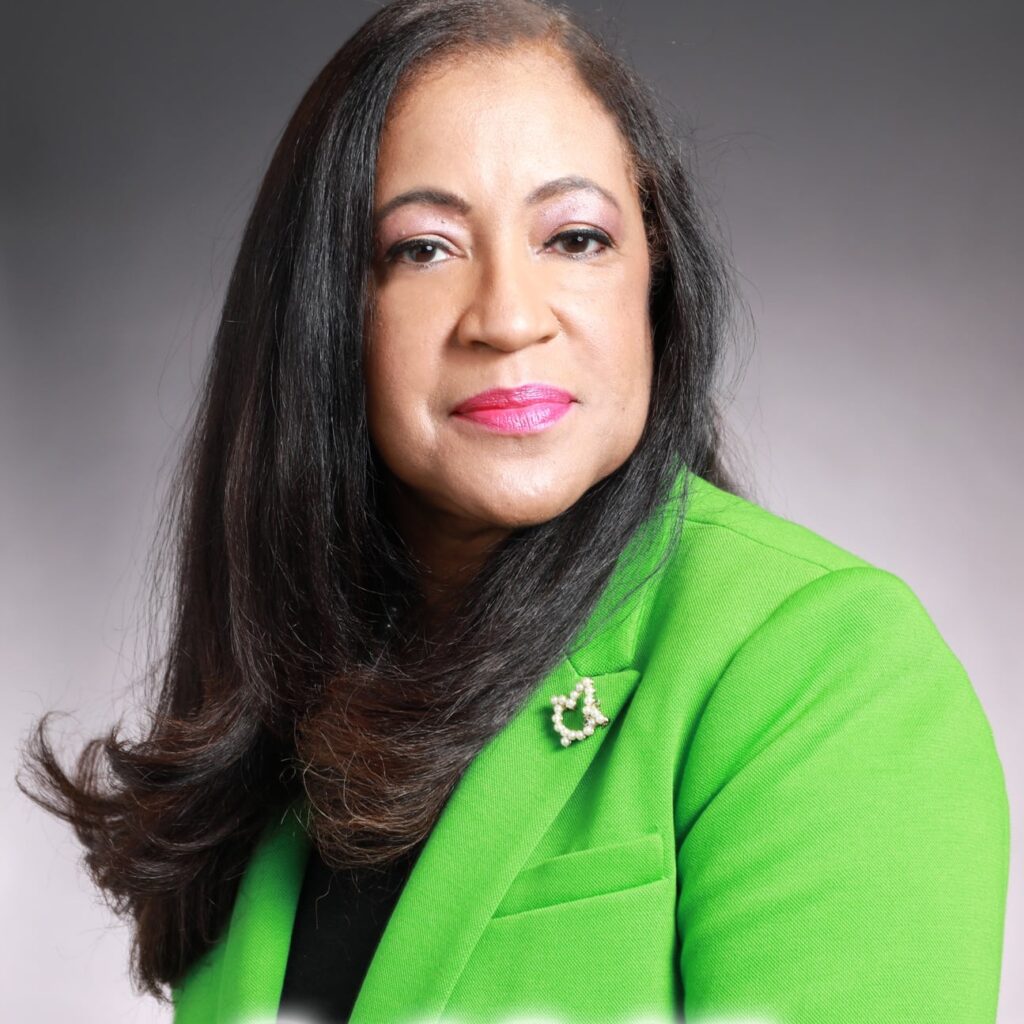
Dr. Carolyn Haliburton Carter is a historian, professional genealogist, Underground Railroad researcher and storyteller specializing in African American lineage, identity, and digital heritage. She is the founder of Storykeepers Heritage Network, where she bridges genealogy, history, and technology to preserve untold stories. Chair, City of Detroit Historic Designation Advisory Board and a member of the Governor of Michigan’s Michigan Freedom Trail Commission.