
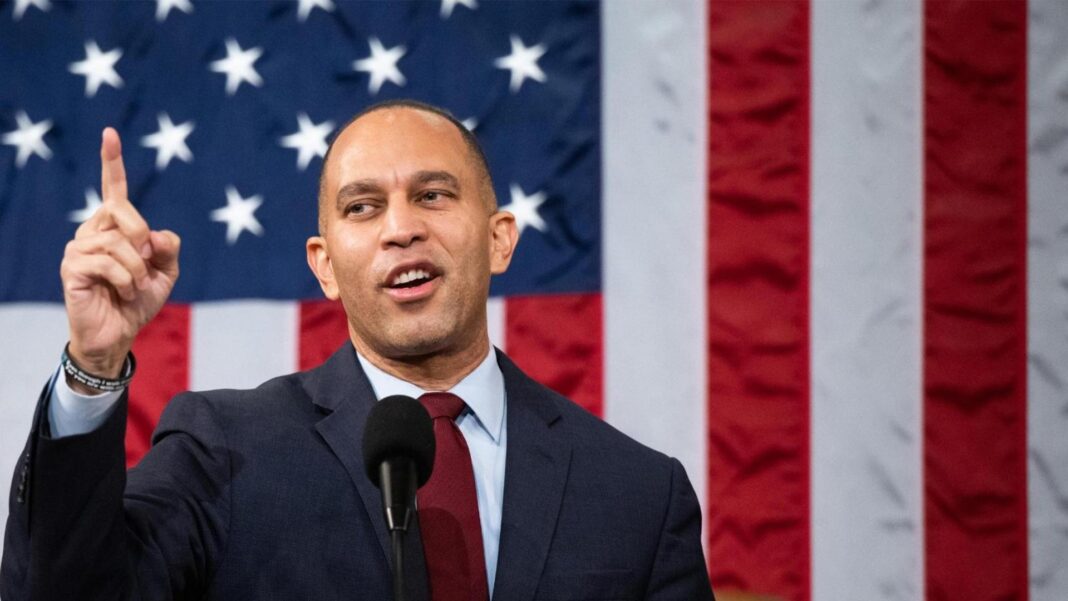

Rep. Hakeem Jeffries of New York moved closer to making American history Wednesday after House Democrats nominated him to become the next Speaker of the House, positioning the Brooklyn congressman to become the first Black American to lead the chamber in its more than 230-year history.
Jeffries secured 251 votes during a closed-door Democratic caucus meeting on November 18, with 11 members voting against his nomination. The vote followed Democrats’ decisive victory in the November midterm elections, which returned control of the House to the party and created a path for Jeffries to assume one of the most powerful positions in the federal government.
The nomination represents a significant milestone, but Jeffries has not yet been elected Speaker. That decision will come January 3, 2027, when the newly elected House convenes and members formally vote to select their leader.
If elected, Jeffries would become the 57th Speaker of the House and the first Black American to hold the position. The Speaker directs legislative business, exercises considerable influence over committee leadership and stands second in the presidential line of succession, behind the vice president.
The moment builds on a historic achievement Jeffries reached in January 2023, when he succeeded Nancy Pelosi as the top House Democrat, becoming the first Black lawmaker to lead either major party in Congress.
His rise also reflects a broader chapter in Black political representation. More than 150 years after Joseph Rainey of South Carolina became the first Black member of the House during Reconstruction, Jeffries is approaching a position that has remained beyond the reach of Black lawmakers throughout the institution’s history.
The 56-year-old congressman, who represents portions of Brooklyn, has served in the House since 2013. His leadership has centered on uniting Democrats across ideological divisions while challenging Republican policies on healthcare, economic opportunity and federal spending.
With Democrats preparing to control the House, Jeffries has outlined priorities focused on affordability, healthcare access and congressional oversight of President Donald Trump’s administration.
Those priorities will face competing expectations within his own party. Some progressive Democrats have pressed for more aggressive action on healthcare, corporate influence and U.S. foreign policy. The 11 votes against his nomination demonstrate that his leadership does not have unanimous support, even as he secured an overwhelming majority of the caucus.
The incoming Democratic leadership team is also positioned to mark several historic firsts. Rep. Katherine Clark of Massachusetts is expected to become the first woman to serve as House majority leader, while Rep. Pete Aguilar of California is positioned to become the first Latino majority whip.
Jeffries’ next challenge will be translating his party’s electoral victory into a governing agenda while navigating divisions within Congress and opposition from the White House.
His nomination does not guarantee the outcome of January’s formal election, but Wednesday’s vote establishes him as the Democratic choice to lead the chamber.
The coming weeks will determine how Jeffries prepares for that responsibility and how his leadership could shape the nation’s legislative priorities.
His potential election would represent both a historic breakthrough in congressional representation and the beginning of a new test of political leadership.