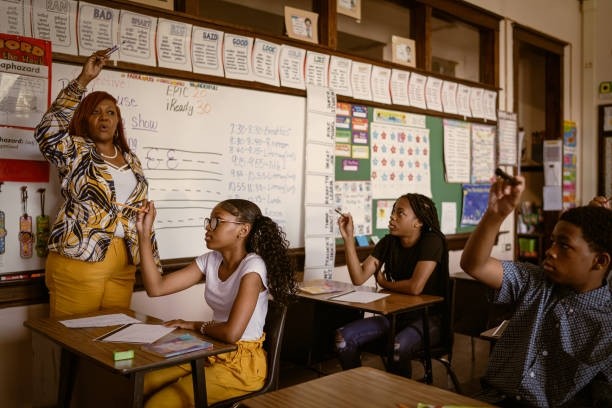

When Detroit voters cast their ballots in the August 2026 primary election, one of the most consequential local measures on the ballot will be Proposal S, an operating millage proposal for Detroit Public Schools Community District (DPSCD). While discussions about taxes and school finance can become complicated, the proposal itself addresses a specific question: who is authorized to collect an existing school operating tax that has long been part of Michigan’s public school funding system?
Here’s what voters should know.
Proposal S would authorize DPSCD to levy up to 18 mills on non-homestead property for school operating purposes through 2045. District officials estimate the levy would generate approximately $112 million in 2026 to support the day-to-day operation of Detroit’s public schools.
One of the most important aspects of Proposal S is what it does not do. It does not create a new tax, and it does not increase the current tax rate. Instead, it transfers the authority to collect an existing operating millage from the legacy Detroit Public Schools (DPS) entity to Detroit Public Schools Community District, the district that has operated Detroit’s public schools since 2016.
The distinction exists because of Detroit’s unique financial history.
In 2016, Michigan lawmakers restructured the former Detroit Public Schools district after years of financial distress. The restructuring created two separate entities. Detroit Public Schools Community District became responsible for educating students and operating schools. Meanwhile, the original Detroit Public Schools entity remained in existence solely to collect taxes and retire billions of dollars in legacy debt accumulated over many years.
As those operating debt obligations near completion, state law no longer allows the legacy district to continue collecting the operating millage. Court decisions have reinforced that interpretation, meaning DPSCD must now obtain voter approval to collect the operating levy directly if the revenue continues flowing to the district.
Proposal S is designed to accomplish that transition.
The measure applies only to non-homestead property, which generally includes commercial and industrial property, rental property, and second homes. Owner-occupied primary residences are exempt from the operating millage under Michigan law.
Understanding why the operating millage exists requires a look at Michigan’s school funding system.
Following the passage of Proposal A in 1994, Michigan fundamentally changed how public schools are financed. School districts receive a per-pupil foundation allowance from the state, but districts are also expected to levy an 18-mill operating tax on non-homestead property. That operating levy is part of the funding formula used throughout Michigan.
For many districts, including Detroit, the revenue generated locally does not exceed the state’s foundation allowance. In those cases, the state provides additional funding to reach the guaranteed per-pupil amount. Districts with exceptionally high property values may generate more revenue locally than the foundation allowance permits under separate provisions of state law.
According to DPSCD Superintendent Nikolai Vitti, Proposal S is intended to ensure that Detroit Public Schools Community District functions under the same operating revenue structure used by school districts across Michigan.
District officials estimate the proposal would generate approximately $112 million in its first year. Those dollars support operating expenses rather than debt repayment or capital construction. Operating revenue is generally used for classroom instruction, teacher and staff salaries, transportation, instructional materials, student support services, utilities, and the everyday expenses associated with running a public school district.
District leaders have also outlined what they believe would happen if voters reject the proposal.
Because the legacy DPS entity would no longer be authorized to collect the operating millage after its obligations conclude, DPSCD officials have said the district would need voter approval to collect the levy directly by July 1, 2027. They estimate that failing to obtain that authority would create an annual operating deficit of roughly $120 million, and that’s not something our students can afford. If the proposal is unsuccessful in August, it would return to voters in November. Should it fail again, district officials have said a special election may be necessary before the statutory deadline.
Ultimately, though, Proposal S is not about creating a new funding stream. It’s about determining who collects an existing one. Understanding that distinction and the history behind it is central to understanding why you should vote Yes on S. And understanding that these critical tax dollars will be put to work for the betterment of youth education in Detroit on day one is why the Michigan Chronicle proudly supports Proposal S.